

Why Cortisol Rhythm Matters in the Morning
Cortisol often gets talked about like it is simply a “stress hormone,” but in a healthy rhythm it is also part of what helps you wake up, feel alert, and transition into the day. Normally, cortisol rises in the first part of the morning and then gradually tapers as the day goes on. That rise is part of your circadian rhythm, the body’s internal clock, which is strongly influenced by light exposure and your sleep-wake cycle.
Use Morning Light to Signal Safety and Wakefulness
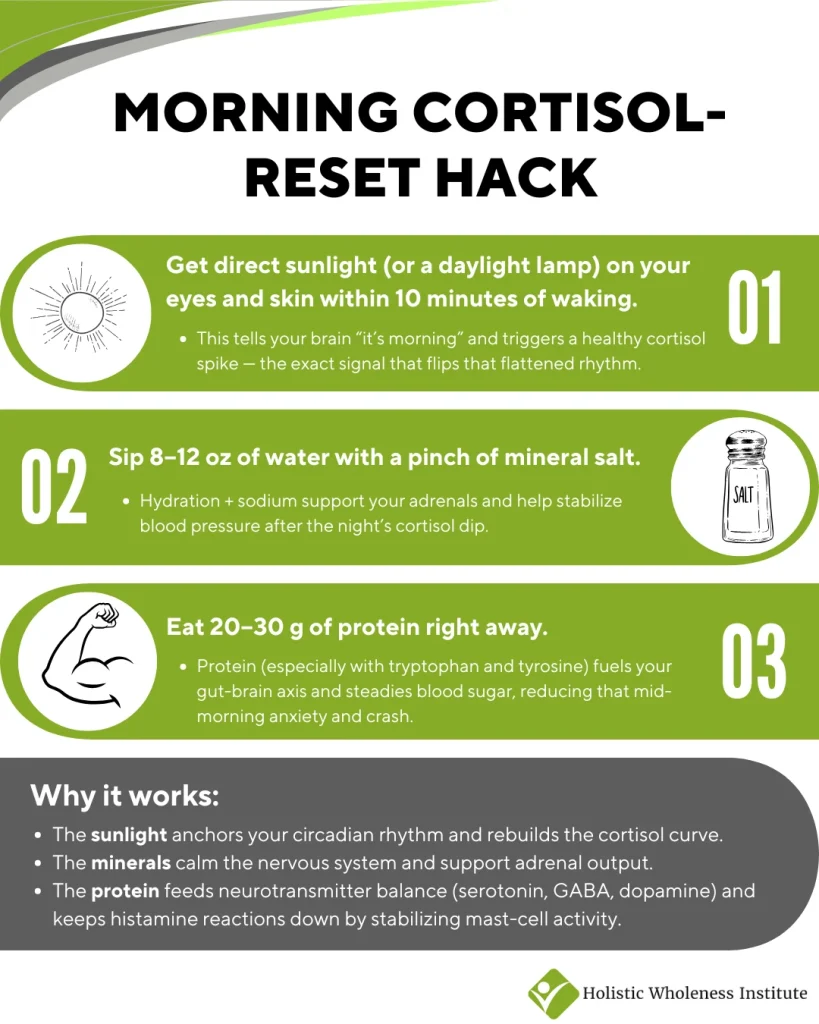
One of the simplest ways to support a healthier morning rhythm is to get bright natural light soon after waking. Morning light helps anchor circadian timing and supports the normal cortisol awakening response, which can influence energy, alertness, and sleep timing later in the day. Even a few minutes of outdoor light can be helpful, and a daylight lamp may be a practical backup when natural sunlight is limited.
Hydrate Early, Then Build Breakfast Around Protein
After a night of sleep, many people feel better when they start the day with water and a nourishing breakfast instead of jumping straight to caffeine. A protein-rich breakfast can improve satiety and support steadier blood sugar and energy through the morning, especially compared with a highly refined carbohydrate breakfast. Some people also like adding a small amount of minerals, but this should be individualized, especially for anyone with high blood pressure or who has been told to limit sodium.
A Better Morning Often Starts With Small, Repeatable Habits
You do not need an elaborate routine to support your system. Light, hydration, and protein are simple anchors that can help the body feel more stable and predictable first thing in the morning. Over time, these small habits may support better energy, fewer crashes, and a more resilient daily rhythm, which is often far more powerful than relying on willpower and stimulants alone.
Want more steady energy and fewer morning crashes? Start with simple, science-backed habits that support your natural cortisol rhythm. Schedule a consultation to create a personalized morning routine that works with your body—not against it.