

Parasites Are More Common Than Many People Realize
When people hear the word parasites, they often imagine something rare, dramatic, or only relevant after international travel. But in functional medicine, parasites are understood as one possible contributor to chronic digestive symptoms, immune stress, skin flare ups, fatigue, food sensitivities, and a general sense that the body is not fully thriving. They can enter through contaminated food or water, animal exposure, travel, poor gut resilience, or simply a weakened internal terrain. The important point is not fear, but awareness. Sometimes what looks like “just bloating” or a stubborn digestive issue has a deeper parasitic story underneath it.
The Symptoms Can Be Vague, Frustrating, and Easy to Miss
Parasitic issues do not always announce themselves in an obvious way. Some people experience bloating, nausea, loose stools, constipation, abdominal discomfort, or alternating bowel patterns. Others notice more indirect signs such as fatigue, histamine intolerance, skin irritation, brain fog, poor nutrient absorption, or feeling reactive to foods they used to tolerate. This is part of what makes the topic so important. A parasitic burden can hide behind symptoms that are often dismissed as stress, IBS, or a “sensitive stomach,” while continuing to quietly disrupt digestion and immune balance.
In Functional Medicine, the Goal Is to Understand and Heal the Terrain, Not Just Kill the Bug
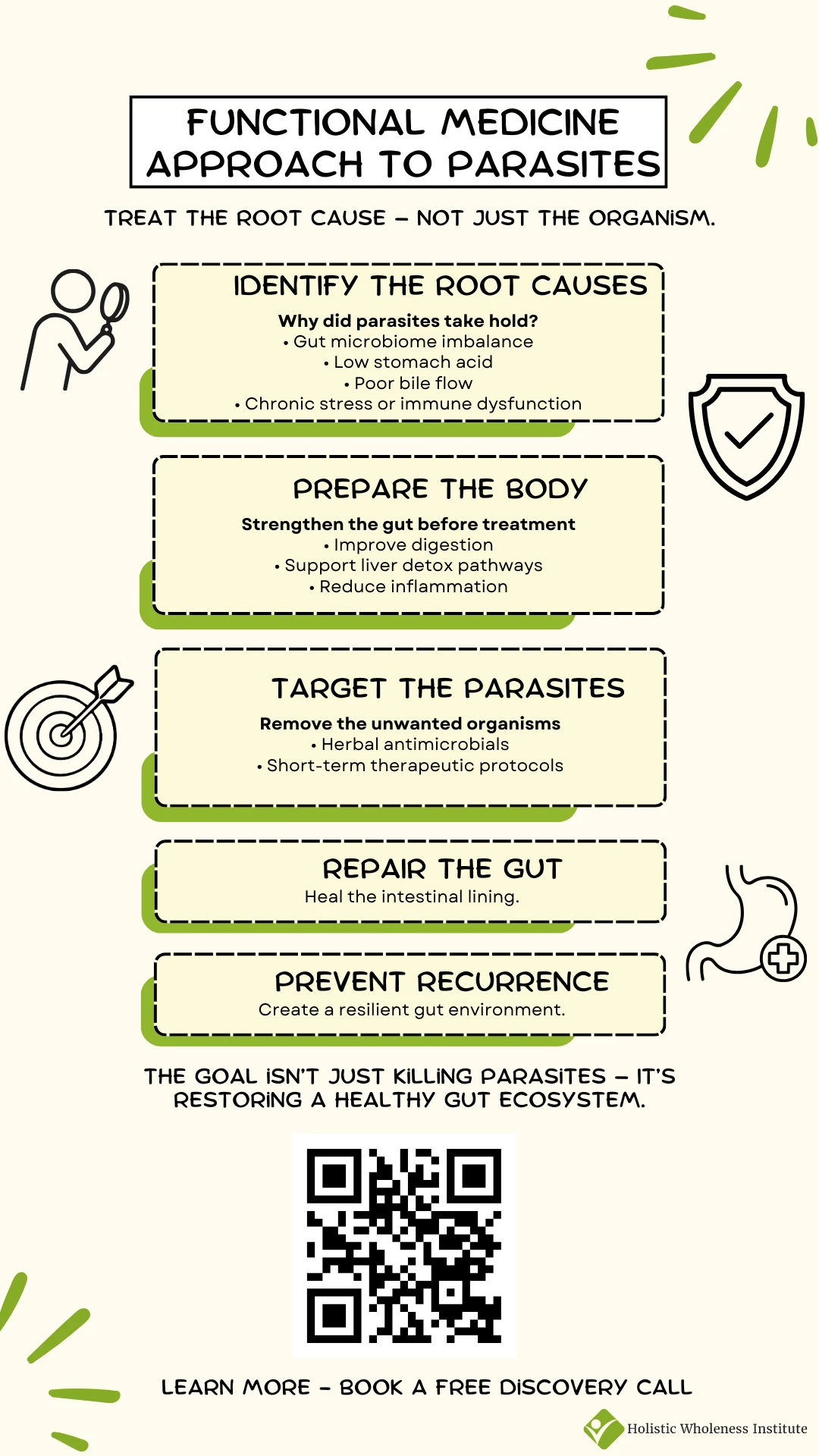
A more complete approach asks why the body became vulnerable in the first place. Low stomach acid, poor bile flow, chronic stress, gut inflammation, dysbiosis, lack of microbial diversity, and a weakened intestinal barrier can all create conditions where parasites are more likely to take hold. That is why a functional medicine approach goes beyond simply trying to eradicate an organism. It looks at the whole digestive ecosystem, the immune system, and the person’s overall resilience. The body is not just a battlefield, it is an environment, and healing often requires rebuilding that environment.
Healing Usually Requires a Layered, Strategic Approach
Rather than using a one step strategy, functional medicine often works in phases. This may include targeted antimicrobial or antiparasitic support, digestive support to improve breakdown and absorption, gentle gut repair nutrients, and later reinoculation with beneficial bacteria when appropriate. Food quality matters, stress regulation matters, sleep matters, and bowel regularity matters. The process is often less about one dramatic intervention and more about carefully peeling back layers, reducing the burden, and helping the gut regain strength and rhythm.
When Gut Ecology Improves, the Whole Body Often Feels the Difference
The digestive tract is not an isolated system. It influences energy, mood, immunity, inflammation, skin health, and even how resilient you feel from day to day. When parasitic burden and broader gut dysfunction are addressed thoughtfully, people often notice that they do not just digest better, they feel clearer, calmer, lighter, and more stable overall. That is the deeper promise of a functional medicine approach. It is not only about removing what does not belong, it is about restoring an inner environment where health can take root again.
If you’re struggling with persistent digestive symptoms, fatigue, food sensitivities, or unexplained inflammation, don’t settle for simply managing the symptoms. At Holistic Wholeness Institute, we take a root-cause approach to uncover hidden contributors like parasites, gut imbalances, and digestive dysfunction. Schedule a consultation today to receive a personalized evaluation and a comprehensive plan to restore your gut health and overall well-being.