Holiday Meals Do Not Have to Mean a Blood Sugar Crash
Big holiday meals are often associated with feeling heavy, sleepy, bloated, and foggy afterward, but a lot of that has to do with how the meal is structured, not just the fact that it is celebratory. When a plate is loaded first with bread, stuffing, mashed potatoes, and dessert, blood sugar tends to rise more quickly and fall more dramatically afterward. That roller coaster can leave you feeling tired, craving more sweets, and reaching for coffee or leftovers an hour later. The good news is that a few simple sequencing strategies can make a festive meal feel much steadier and more enjoyable.
Starting With Vegetables Helps Slow the Entire Meal Down
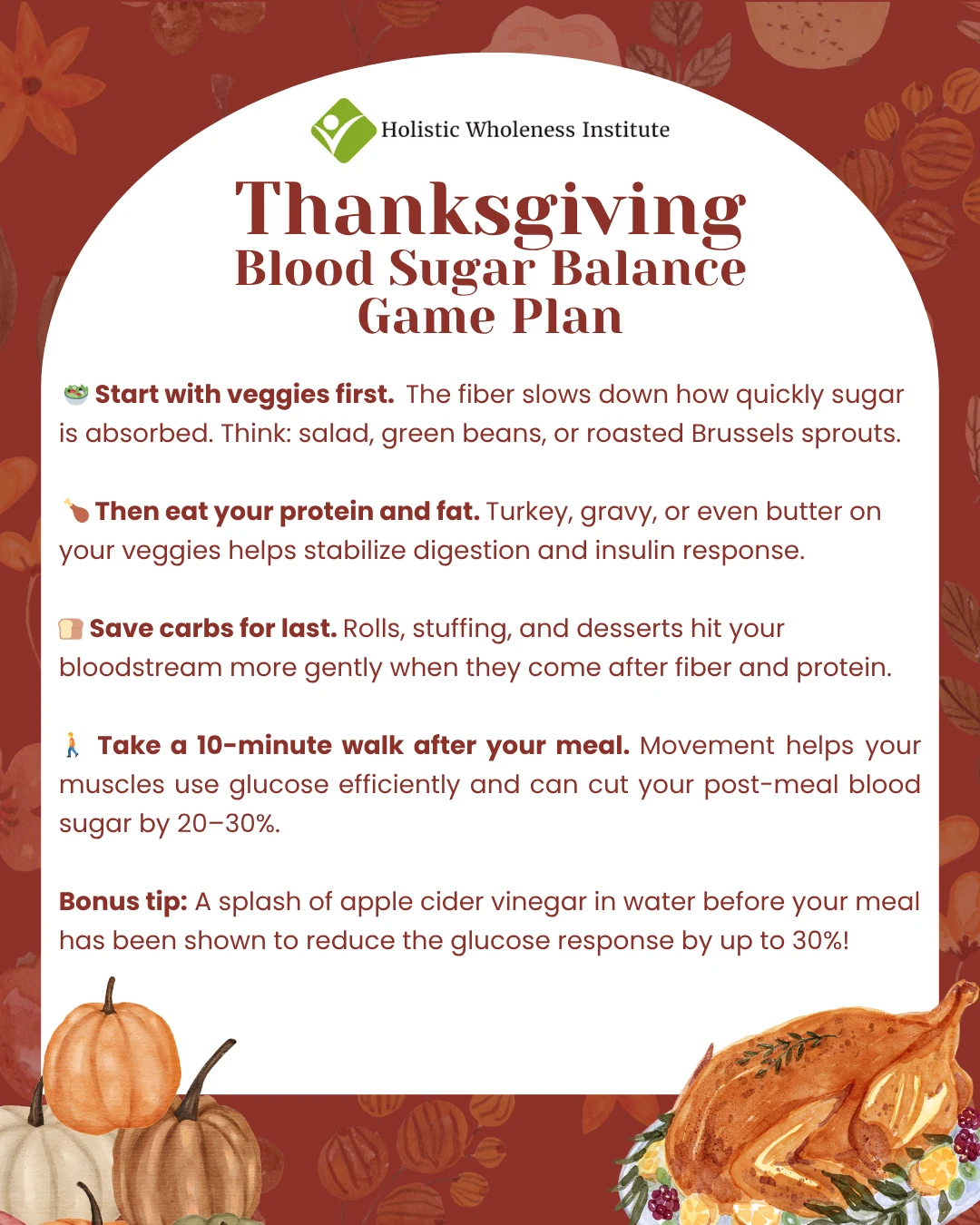
One of the simplest and most effective tools is to begin with vegetables. Fiber helps slow how quickly sugar is absorbed and creates a gentler entry into the meal for your digestive system and your blood sugar. A salad, green beans, Brussels sprouts, or other non starchy vegetables act almost like a metabolic buffer. They create a softer landing for the richer and more carbohydrate dense foods that may come later. This one small shift can help you feel more satisfied, less reactive, and far less likely to crash after eating.
Protein and Fat Create More Stability and Satisfaction
After vegetables, eating protein and fat helps further steady the meal. Turkey, gravy, butter, olive oil, or other nourishing fats slow digestion in a helpful way and create more sustained fullness. This matters because when the body receives protein and fat before a large amount of starch or sugar, the glucose response tends to be more controlled. Instead of a sharp spike followed by a slump, the meal feels more even and grounding. It is a much calmer experience for both energy and appetite.
Saving Carbs and Dessert for Later Can Change How You Feel
Carbohydrates are not the enemy, but timing matters. When rolls, stuffing, potatoes, or dessert come after fiber, protein, and fat, they tend to hit the bloodstream more gently than when eaten first on an empty stomach. This approach allows you to still enjoy the foods you love while creating a more balanced internal response. It’s less about restriction, and more about sequence. The order in which you eat can shape how the body handles the meal.
A Short Walk After Eating Can Be Surprisingly Powerful
One of the most underrated holiday strategies is movement after the meal. A relaxed ten minute walk can help muscles use glucose more efficiently and may noticeably reduce that overly full, sluggish feeling that often follows a rich dinner. Even a gentle walk around the block can help shift the body out of post meal heaviness and into a more energized state. For some people, a splash of apple cider vinegar in water before the meal may also be a helpful addition. Together, these simple habits can help turn a holiday meal into something satisfying, festive, and much easier on your energy and blood sugar.
Enjoy the Holidays Without the Energy Crash
You don’t have to avoid your favorite holiday foods to feel good after a festive meal. Small changes—like starting with vegetables, prioritizing protein, and taking a short walk afterward—can help support steadier energy and more comfortable digestion.
Want to better understand how nutrition and lifestyle habits affect your energy, metabolism, and overall health? Schedule a consultation to explore a personalized approach that works for you.