

GLP-1 Is One of the Body’s Most Important Signals for Appetite and Blood Sugar Balance
GLP-1 is often talked about now because of weight loss medications, but it is actually a hormone your body already makes on its own. It plays a powerful role in helping you feel full, supporting steadier blood sugar, improving insulin response, and reducing the urge to keep eating long after your body has had enough. When this signaling is working well, appetite tends to feel calmer, energy more stable, and cravings less intense. The goal is not simply to suppress hunger, but to support the metabolic messaging that helps the body regulate itself more naturally.
Protein Rich Whole Foods Are One of the Strongest Natural GLP-1 Supports
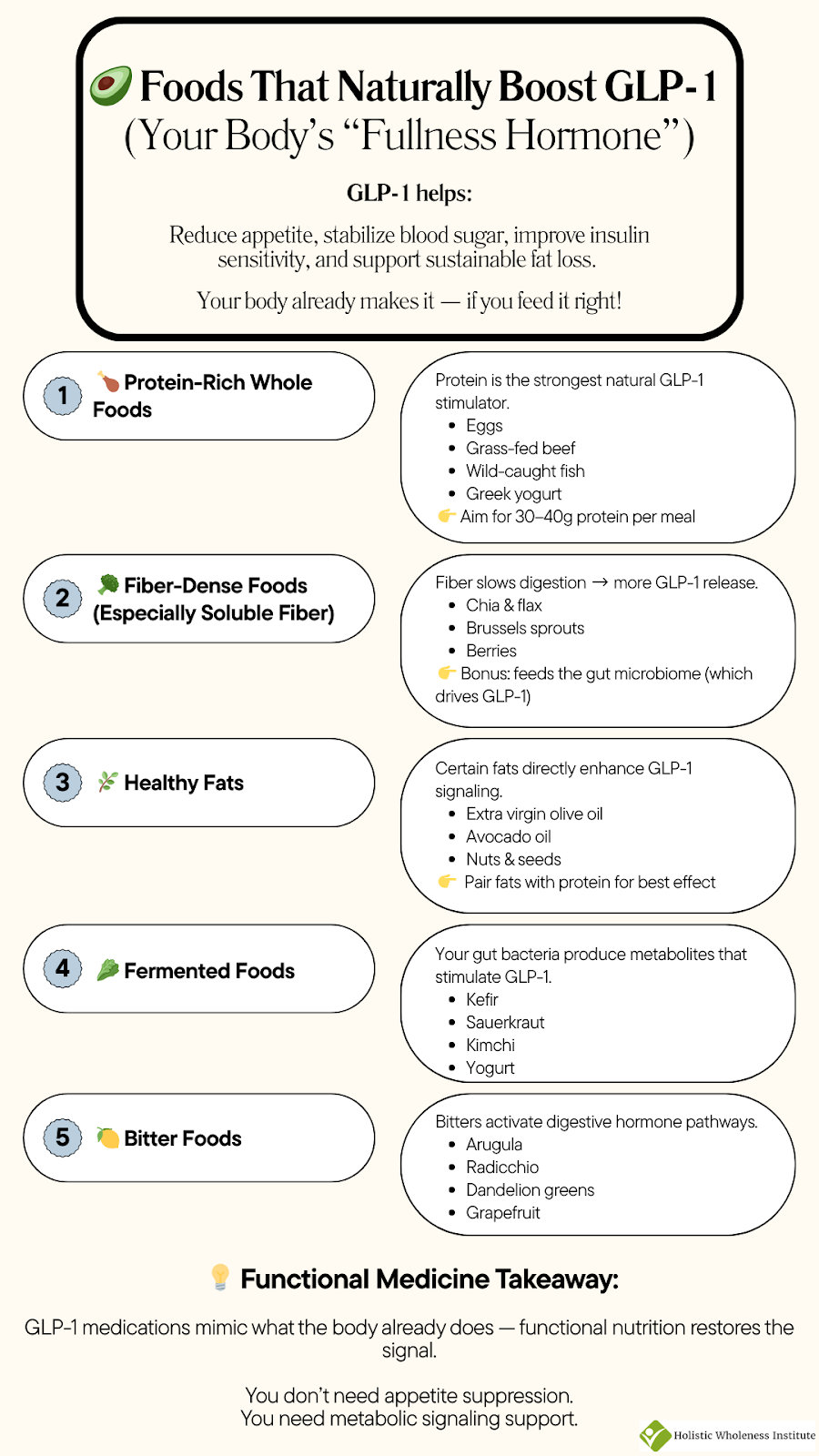
Protein is one of the most effective nutritional triggers for GLP-1 release. Meals built around eggs, grass fed beef, wild caught fish, or Greek yogurt tend to be far more satisfying than meals built mostly around refined carbohydrates. Protein helps create a deeper sense of fullness, slows the pace of hunger returning, and supports blood sugar stability at the same time. For many people, simply centering meals around a meaningful amount of protein can begin to shift the entire appetite experience from chaotic and snack driven to being steadier and more grounded.
Fiber Helps Slow Digestion and Extend Fullness
Fiber dense foods, especially those rich in soluble fiber, are another major ally. Chia, flax, Brussels sprouts, and berries do more than support regularity, they help slow digestion and create a gentler, more sustained release of energy from a meal. That slower pace can support GLP-1 activity and help the body feel satisfied for longer. Fiber also feeds the gut microbiome, and that matters because a healthier gut ecosystem can influence many of the same metabolic pathways tied to fullness, cravings, and blood sugar balance.
Healthy Fats and Fermented Foods Add Another Layer of Metabolic Support
Healthy fats such as extra virgin olive oil, avocado oil, coconut oil, nuts, and seeds can help enhance satiety and make meals feel more complete, especially when paired with protein. Fermented foods like organic sauerkraut, kimchi, miso, tempeh, pickles and kefir add another dimension by supporting the gut microbiome, which in turn can influence metabolic signaling. Together, these foods help create meals that do not just fill the stomach for a moment, but communicate more clearly with the body’s deeper appetite regulation systems.
Bitter Foods Remind Us That Digestion Starts Before the Meal Is Even Over
Bitter foods such as arugula, radicchio, dandelion greens, and grapefruit offer a final, often overlooked layer of support. Bitters stimulate digestive pathways and help wake up the body’s digestive intelligence, encouraging better hormonal and metabolic signaling around food. When you put all of this together, protein, fiber, healthy fats, fermented foods, and bitters, you begin to create meals that work with the body rather than against it. This is where nutrition becomes deeply strategic, not by forcing appetite down, but by helping the body remember how to regulate hunger, fullness, and blood sugar more intelligently.
Ready to work with your body’s natural appetite and blood sugar regulation instead of constantly fighting cravings? At Holistic Wholeness Institute, we use functional medicine and personalized nutrition strategies to uncover the root causes of metabolic imbalance. Schedule a consultation today to learn how targeted nutrition and lifestyle changes can help you achieve lasting energy, balanced blood sugar, and sustainable weight management.